Buying a franchise is one of the biggest financial moves you will ever make. Many people just look at the price tag on the brochure, but the actual cost goes much deeper.
You have to think about upfront fees, working capital, ongoing royalties, and extra expenses that pop up later in the process.
This guide breaks down everything you need to pay at the start, what you owe over time, and the surprise costs that catch new owners off guard.
Understanding these numbers is important before you sign any contract.
Table of contents:
✦ Free Franchise Quiz
Stop guessing.
Find your perfect franchise match.
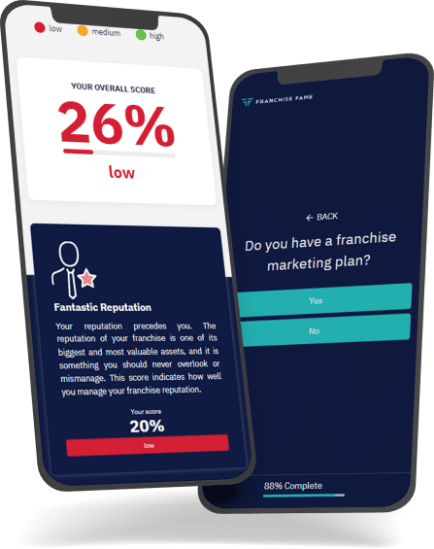
Answer 5 quick questions and get a personalised franchise recommendation — built around your budget, lifestyle, and goals. No sales pitch, just clarity.
Trusted by thousands of aspiring franchise owners across the UK & US
The True Cost of Running a Franchise
Franchise expenses generally fall into three main buckets:
- Initial costs: Money you pay before opening your doors.
- Ongoing operational costs: Regular bills you pay throughout the life of the business.
- Exit costs: Fees you owe when you renew your contract or leave the system.
Let’s look closely at how these numbers actually break down.
Part 1: Upfront Costs
The initial franchise fee
The initial franchise fee is the entry price for joining the network. This payment gives you the legal right to use the brand name, access their business systems, and use their intellectual property.
But this fee is usually non-negotiable because franchisors want every owner on equal footing.
Every company includes different things in this fee, but it usually covers:
- Initial training and onboarding
- Help choosing a business location
- Grand opening support
- Access to corporate software and systems
The price depends on the industry:
- Small or new brands might charge $10,000.
- Mid-tier companies usually ask for $25,000 to $50,000.
- Big names in food or hospitality can easily demand $500,000 or more.
Working capital and start-up costs
This is where many new owners get caught by surprise. You need enough cash to get the business running and keep it afloat until you start making money.
- Building and construction: Physical locations like restaurants or gyms require major renovations. You will pay for permits, design work, furniture, and signs.
- Equipment: Food businesses and medical franchises require specialized machines that cost tens of thousands of dollars.
- Inventory and supplies: You must buy your opening stock, ingredients, and uniforms before you open.
- Hiring and training: You have to pay staff wages and background check fees before serving your first customer.
But the biggest risk is running out of money too soon. You need a cash buffer for the first six months to pay for rent and utilities while your customer base grows.
Read also: How to fund your franchise business
Professional services
Never sign a contract based only on what the corporate office tells you. You need independent experts on your side.
- Franchise attorney: A lawyer reviews the Franchise Disclosure Document (FDD) to find hidden clauses. This usually costs $1,500 to $5,000.
- Accountant: A certified public accountant will check your financial models to see if the investment makes sense.
Insurance and travel
Corporate offices require specific insurance policies like workers’ compensation and cyber liability. You should budget $2,000 to $10,000 every year for these policies.
And do not forget travel costs. Most brands expect you to visit their headquarters for a Discovery Day, and you must pay for your own flights and hotels.
Read also: 11 Risk Factors to Consider Before Buying a Franchise
Part 2: Ongoing Bills
Royalty fees
The royalty fee is how the corporate office makes money. It pays for your continued use of the brand name and corporate support staff.
- Percentage of sales: Most brands take 4% to 12% of your gross sales every month.
- Flat fees: Some companies charge a set dollar amount every week, regardless of your sales.
Marketing funds
Almost every system makes you pay into a national advertising fund. This usually takes 1% to 4% of your revenue to pay for big ad campaigns.
But you are still responsible for your own local marketing costs, like sponsoring community events or running local social media pages.
Supply chain rules
Many brands ask you to buy ingredients and inventory from their approved suppliers. Corporate offices often present this as a discount program.
But sometimes the corporate office gets a financial kickback from these suppliers, meaning you might pay more than if you bought items on your own.
How it works
Ready to find your perfect franchise?
Skip the guesswork. Take our free ScoreApp quiz and get a data-driven match tailored to you.
Take the Free QuizPart 3: Leaving the System
Renewal and resale fees
Franchise agreements do not last forever. They usually expire after 5 or 10 years. If you want to keep the business going, you must pay a renewal fee that can cost up to half of the original franchise fee.
If you decide to sell your business to a new owner, the corporate office charges a transfer fee to cover training and background checks for the buyer.
Financial Overview
| Fee Category | Low End Estimate | High End Estimate |
| Upfront franchise fee | $10,000 | $100,000+ |
| Set up and working capital | $25,000 | $500,000+ |
| Professional services (legal, accounting) | $2,000 | $10,000 |
| Insurance (annual) | $2,000 | $10,000+ |
| Travel (Discovery Day) | $500 | $2,000 |
| Regular royalties | 4% of gross revenue | 12% of gross revenue |
| Marketing fund (ongoing) | 1% of gross revenue | 4% of gross revenue |
| Renewal fee | 10% of the initial fee | 50% of the initial fee |
| Transfer/resale fee | $1,000 | $10,000+ |
Important Questions for the Corporate Office
- What specific items do I get for the initial fee?
- What is the average failure rate for owners in this system?
- Can I get a list of phone numbers for current and past owners?
- Do you make money off the suppliers I am required to use?
Final Thoughts
The total price of a franchise is never just a single number. It is a long financial commitment.
And remember that the most famous brand is not always the best choice for your bank account.
Take your time, look at the math, choose the right franchise for you, and protect your capital.

Find your next franchise opportunity.
Browse our extensive franchising portal and find the perfect business opportunity for you. Pick your choice of industry, location and/or investment.