The vending industry has always appealed to entrepreneurs who value flexibility, scalability, and passive income potential. As the US vending machine market continues to grow, with a projected CAGR of 10.7% through 2030, new business owners are often faced with a critical decision: should you invest in a franchise business model or launch your own independent vending operation?
Each approach offers distinct benefits, challenges, and startup requirements. In this guide, we’ll break down the pros and cons, walk through startup steps, and explore how to align your vending venture with your long-term goals.
✦ Free Franchise Quiz
Stop guessing.
Find your perfect franchise match.
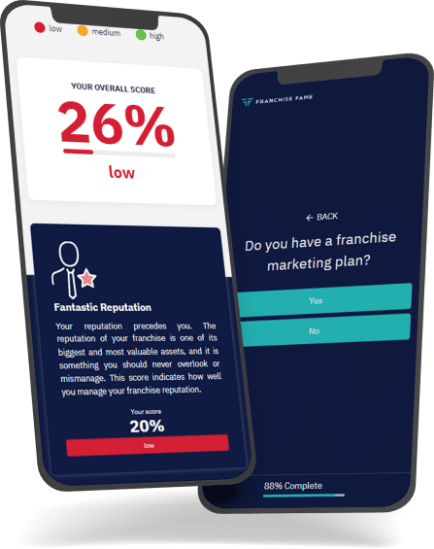
Answer 5 quick questions and get a personalised franchise recommendation — built around your budget, lifestyle, and goals. No sales pitch, just clarity.
Trusted by thousands of aspiring franchise owners across the UK & US
To explore current opportunities, visit our main vending franchise directory and compare leading brands in this fast-growing sector.
In this article:
Franchise Model vs. Independent Vending: What’s the Difference?
Key features of a franchise model
A franchise business model allows entrepreneurs to operate under an established brand, following proven systems and standards. Key features include:
- Franchise support (training, supply chain): Franchisors often provide comprehensive onboarding, machine placement assistance, product supply chain partnerships, and ongoing business coaching. This support network reduces trial-and-error risks.
- Branding and restrictions: Franchisees benefit from a recognizable brand name and marketing campaigns. However, they must follow the franchisor’s rules around products, equipment, and branding.
- Flexibility and startup costs: While many vending franchises offer relatively low investment entry points (some starting under $10,000), franchisees pay a franchise fee and may owe ongoing royalties or ad fund contributions. Flexibility in product choice is often limited compared to independent vending.
Popular examples from our directory include HealthyYOU Vending, Naturals2Go, and IceBorn, each offering unique niches like healthy snacks, smart vending, and ice/water machines.
Explore top vending franchises in the US for detailed investment ranges and requirements.
Key features of an independent vending business
Independent vending operators build their businesses from scratch without franchisor involvement. Key features include:
- Full control and flexibility: Owners can choose any product mix, from snacks and beverages to personal care and electronics. Branding, pricing, and marketing are entirely at the entrepreneur’s discretion.
- Lower ongoing costs: Without royalties or franchise restrictions, ongoing expenses may be limited to inventory, machine maintenance, and location commissions.
- Higher risk: Independent operators don’t benefit from established supply chains, training, or a support network. Mistakes in site selection, product mix, or pricing can impact profitability.
- Startup costs: Equipment must be purchased outright or leased independently. Costs vary widely based on machine type and quality, ranging from $2,000 to $10,000 per unit.
Independent vending appeals most to seasoned entrepreneurs confident in their ability to negotiate contracts, manage logistics, and adapt to market changes without external support.
Comparing Pros and Cons
To make the differences clearer, here’s a side-by-side comparison table of the franchise business model versus independent vending:
| Feature | Franchise Model | Independent Model |
| Startup Support | Comprehensive training, supply chain access, marketing tools | None; owners must create systems independently |
| Brand Recognition | Operate under an established, trusted name | Must build brand reputation from scratch |
| Flexibility | Limited product and branding choices due to franchisor restrictions | Full control over product mix, branding, and pricing |
| Investment | Lower entry options available; requires franchise fee and possible royalty payments | Flexible investment; costs vary based on machine type and number |
| Ongoing Costs | Royalties, ad fund, machine restocking, maintenance | Machine restocking, maintenance, location commissions only |
| Risk | Lower, thanks to franchisor guidance and established systems | Higher, as there is no structured support network |
| Scalability | Easier to scale with franchisor-provided systems and territories | Scaling possible but requires independent negotiations and expansion efforts |
How it works
Ready to find your perfect franchise?
Skip the guesswork. Take our free ScoreApp quiz and get a data-driven match tailored to you.
Take the Free QuizWhich model fits your goals?
The decision between a franchise and an independent model depends on your entrepreneurial goals, financial capacity, and appetite for risk.
- Scalability potential: Franchises often make scaling easier, since franchisors provide location strategies, vendor partnerships, and marketing systems. Independents must build these structures on their own.
- Risk and upfront investment: Independent vending may cost less upfront if you purchase used machines and start small. However, the lack of a support network increases business risks. Franchises may have higher upfront investment but reduce risk with structured guidance.
Steps to Start Each Vending Business Type
From the franchise business model to the independent vending route, your success will depend on following a structured startup plan.
Step-by-step franchise acquisition
- Research opportunities: Browse reputable brands in our vending franchise directory. Popular options include Healthier 4U, Xpresso Delight, and Alsies.
- Submit inquiries: Request franchise disclosure documents (FDDs) to understand investment requirements, fees, and support offered.
- Secure financing: Explore personal savings, loans, or franchisor financing programs.
- Sign franchise agreement: Commit to the brand’s restrictions and operational standards.
- Obtain permits/licenses: Make sure you are compliant with state and local vending regulations.
- Site selection: Work with the franchisor to place machines in high-traffic areas (offices, schools, airports, gyms).
- Launch and scale: Begin operations with franchisor guidance and expand to additional machines or territories.
For state-specific opportunities, visit California vending franchises or Texas vending franchises to see availability in your region.
Step-by-step independent vending startup
- Research opportunities: Evaluate demand in your target area. Unlike a franchise, you won’t have a prebuilt directory, so consider local trends and competitors.
- Secure locations: Negotiate directly with property managers or businesses to place machines. Effective site selection is critical.
- Obtain necessary permits/licenses: Regulations vary by state; food, beverage, or tobacco vending may require special permits.
- Purchase equipment: Acquire machines (new, refurbished, or leased). Expect to pay $2,000–$10,000 per unit depending on type.
- Stock inventory: Choose products based on customer demographics. Independent operators often experiment with niche items (local snacks, specialty drinks, personal care items).
- Maintain machines: Handle servicing, cash collection, and restocking personally or hire a technician.
- Scale at your pace: Use profits to purchase additional machines and expand territory.
Independent vending requires more hands-on entrepreneurship, but it provides maximum flexibility for creative operators.
Final Thoughts: Franchise vs. Independent Vending
Both vending paths offer strong entrepreneurship potential in today’s expanding market.
- A franchise business model is ideal for entrepreneurs seeking lower risk, structured support networks, and proven systems, even if that means accepting some restrictions and fees.
- An independent vending venture is better suited for experienced operators who value full control, greater flexibility, and the ability to build a custom brand from the ground up.
The right choice depends on your personality, resources, and long-term growth goals. What remains clear is that vending (franchised or independent) continues to be a profitable business opportunity, thanks to strong consumer demand, evolving market growth, and the rise of smart vending technology.
Ready to compare? Start with our main vending franchise listings or explore state opportunities such as Florida vending franchises and New York vending franchises to find your perfect fit.
Which franchise is the right fit for you?
You don’t have to sift through hundreds of listings. Our quick ScoreApp quiz pinpoints the franchises that align with your finances, interests, and ambitions.
- Tailored recommendations based on your budget
- Matches your lifestyle and long-term goals
- Completely free — no obligation whatsoever